PROTEIN CALCULATOR
Estimate Your Protein Needs
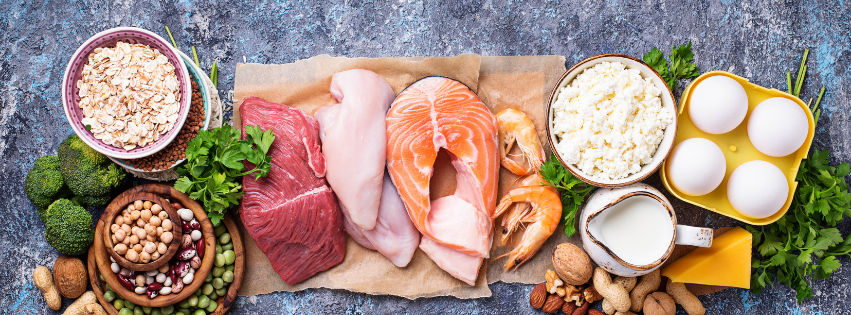
ESTIMATE YOUR DAILY PROTEIN NEEDS
Estimate your daily protein requirements based on your body weight and individual circumstances.
Protein supports muscle maintenance, recovery and many essential functions throughout the body.
Use the calculator below to estimate a daily protein range based on your body weight, activity, goals and relevant health information.
Your result is a starting estimate, not an exact requirement or medical prescription.
This calculator provides estimated daily protein ranges for adults aged 19 and over.
It is not designed for pregnancy, breastfeeding, or conditions requiring individual medical nutrition advice.
Results are starting estimates, not exact individual requirements.
WHAT DOES YOUR PROTEIN RESULT MEAN?
Your result estimates how much protein you could aim to consume each day.
Your body uses protein to build and repair tissues, including skeletal muscle. Protein also supports enzymes, hormones, immune function and other essential processes.
Protein needs vary depending on body size, activity, resistance training, energy intake and individual circumstances.
The calculator provides a daily range rather than one exact number. The lower and upper values help you understand the range used for your selected circumstances.
If you have obesity, using your full current body weight with a high protein per kilogram target can overestimate an appropriate intake. This is why the choice of reference weight matters
HOW ARE YOUR PROTEIN NEEDS CALCULATED?
Protein recommendations depend on the population, goal and method used to calculate them.
Current body weight: Protein recommendations are commonly expressed as grams per kilogram of body weight per day.
Resistance training: People who regularly strength train may benefit from higher protein intakes than the minimum recommended for generally healthy adults.
Fat loss: Adequate protein and resistance training can help preserve muscle during an energy deficit. The appropriate intake depends on the individual.
Weight maintenance: Protein remains important even when you're not trying to lose body fat or gain muscle.
Obesity: Some clinical and research approaches use ideal, adjusted or reference body weight rather than total current weight. There is no single adjustment method that is universally appropriate.
Medical considerations: Certain health conditions can change protein recommendations and require individual assessment.
The calculator uses the selected circumstances to provide an estimated range. It does not measure muscle mass or directly determine your body's protein requirements.
HOW ACCURATE IS A PROTEIN CALCULATOR?
A protein calculator provides an evidence informed estimate, not a precise measurement of your individual needs.
Research provides useful protein intake ranges for different populations, including adults who resistance train and people trying to retain muscle while losing body fat.
However, those findings cannot determine one exact requirement for every individual.
Your training, overall energy intake, age, body composition and health circumstances can all affect which recommendation is most appropriate.
For people with obesity, the reference weight used in the calculation is especially important. Different methods can produce different estimates.
Use your result as a practical starting point alongside your nutrition, training and progress.
PROTEIN CALCULATOR FAQS
-
Your protein needs depend on your body size, activity, training and goals.
For many healthy adults who exercise regularly, particularly those doing resistance training, research supports protein intakes around 1.4-2.0 grams per kilogram per day. The appropriate body weight used for this calculation may differ for people with obesity.
This is not a universal target for everyone.
-
During weight loss, adequate protein and resistance training can help reduce the loss of muscle.
Some resistance trained individuals may benefit from higher protein intakes during an energy deficit, but this depends on training status, body composition and the size of the deficit.
-
Yes. Protein is needed for normal tissue maintenance and repair regardless of whether your weight is changing.
If you resistance train, adequate protein also supports your training adaptations.
-
Not always. Multiplying current body weight by a high protein target can produce an unnecessarily large recommendation for some people with obesity.
For adults with a BMI of 30 or above, this calculator uses an adjusted reference weight. It calculates the weight corresponding to a BMI of 25 at your height and adds 25% of the difference between that reference weight and your current weight.
This provides a practical starting estimate.
It is not a universally validated method, and individual requirements may differ.
-
Menopause does not automatically mean every woman needs an unusually high protein intake.
Protein requirements should be considered alongside age, activity, resistance training, energy intake and overall health.
Maintaining muscle and strength is important throughout adulthood.
-
GLP-1 medications can reduce appetite and food intake, making it more difficult for some people to consume adequate protein.
Meeting protein needs and participating in appropriate resistance training can help support muscle retention during weight loss.
A GLP-1 prescription does not automatically establish one specific protein requirement.
-
Protein supplies amino acids needed for muscle protein synthesis, but resistance training provides an important stimulus for building muscle.
more protein alone does not guarantee muscle growth.
-
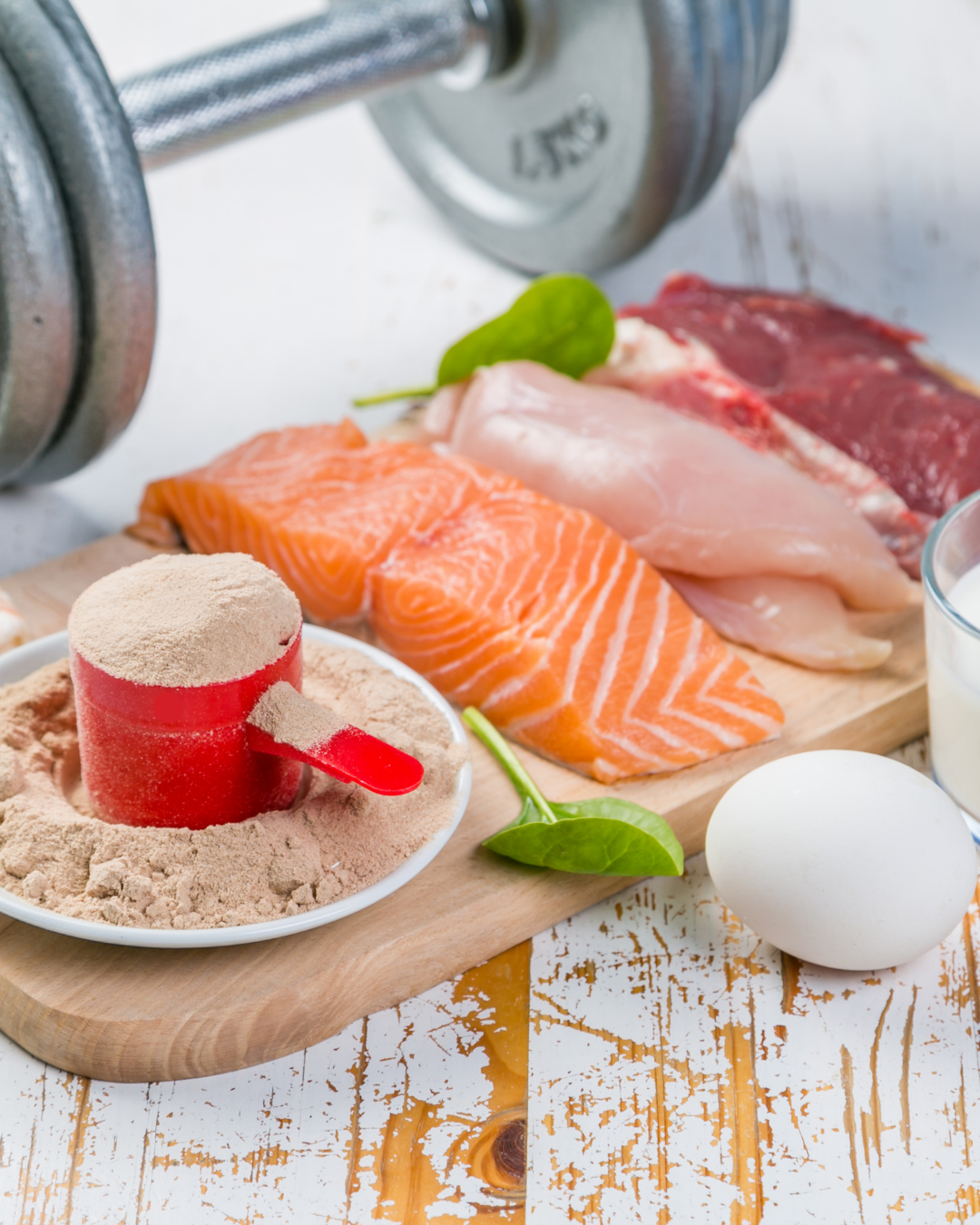
No. You can meet your protein needs through ordinary foods such as meat, fish, eggs, dairy, soy foods and legumes.
Protein powder can be convenient when meeting your needs through food is difficult.
-
Distributing protein across meals is a practical approach, particularly for people who resistance train.
Your total daily protein intake remains an important consideration.
There is no requirement for everyone to eat an identical amount at every meal.
-
Kidney disease can change protein recommendations depending on disease stage, treatment and nutritional status.
This calculator does not provide a protein target for anyone reporting kidney disease.
Seek individual guidance from your treating clinician or renal dietitian.
-
More protein is not automatically better.
Intakes above those needed for your circumstances may offer little additional benefit.
Certain medical conditions also require specific consideration.
COMMON PROTEIN MYTHS
There's plenty of misinformation about protein, particularly around fat loss, menopause and muscle growth.
Myth: Women need extremely high protein intakes during menopause.
There is no single exceptionally high protein target that applies to every menopausal woman. Requirements depend on the individual, and recommendations should reflect the available evidence.
Myth: You need protein immediately after training or you've wasted your workout.
Protein consumed around training can support muscle protein synthesis, but there is no universal requirement to consume a shake immediately after your final set. Total daily intake and meal distribution also matter.
Myth: Protein powder is essential for muscle growth.
Protein powder is a convenient food supplement, not a requirement. Adequate protein can be obtained through a varied diet.
Myth: Everyone should calculate protein using their full body weight.
Not necessarily. In people with obesity, an adjusted or reference weight may be more appropriate for certain calculations.
Myth: More protein always means more muscle.
Muscle growth depends on several factors, including resistance training, adequate energy intake, recovery and protein. Increasing protein beyond an already sufficient intake does not guarantee additional growth.
Myth: Everyone on GLP-1 meds needs extremely high protein.
There is no single high protein target that applies to everyone taking GLP-1 medication. Adequate protein intake and resistance training can help preserve muscle during weight loss, but protein alone cannot guarantee that muscle loss won't occur. The appropriate amount depends on individual circumstances.
READY TO PUT IT INTO PRACTICE?
Knowing your estimated protein needs is only one part of the picture. If you want support with your nutrition, strength training and building an approach you can maintain long term, explore my online coaching programs.
RESEARCH AND REFERENCES
This calculator uses published protein recommendations and a practical adjusted body weight approach for adults with obesity. Results are estimates for general nutrition planning and are not individually validated protein requirements. The most appropriate target may differ according to health, body composition and training.1. Jäger et al. (2017)
International Society of Sports Nutrition Position Stand: Protein and Exercise.
https://pubmed.ncbi.nlm.nih.gov/28642676/
2. Morton et al. (2018)
A systematic review, meta-analysis and meta-regression of the effect of protein supplementation on resistance training-induced gains in muscle mass and strength in healthy adults.
https://pubmed.ncbi.nlm.nih.gov/28698222/
3. Mozaffarian et al. (2025)
Nutritional Priorities to Support GLP-1 Therapy for Obesity: A Joint Advisory.